
Should You Replace Your Fence in Sections or All at Once?
4 June, 2026
If your fence panel breaks or encounters an issue, it’s not always obvious how best to address the problem.
In many cases, homeowners immediately look for the cheapest short-term fix, and only replace the section that is visibly damaged.
However, while it may be tempting to deal with the rest of the fence at a later date, this isn’t always the most cost-effective solution.
Sometimes, replacing your fence as a section is genuinely the right decision. But in many cases, a partial fence replacement only delays the problem, allowing it to escalate into a more extensive – and often more expensive – fix.
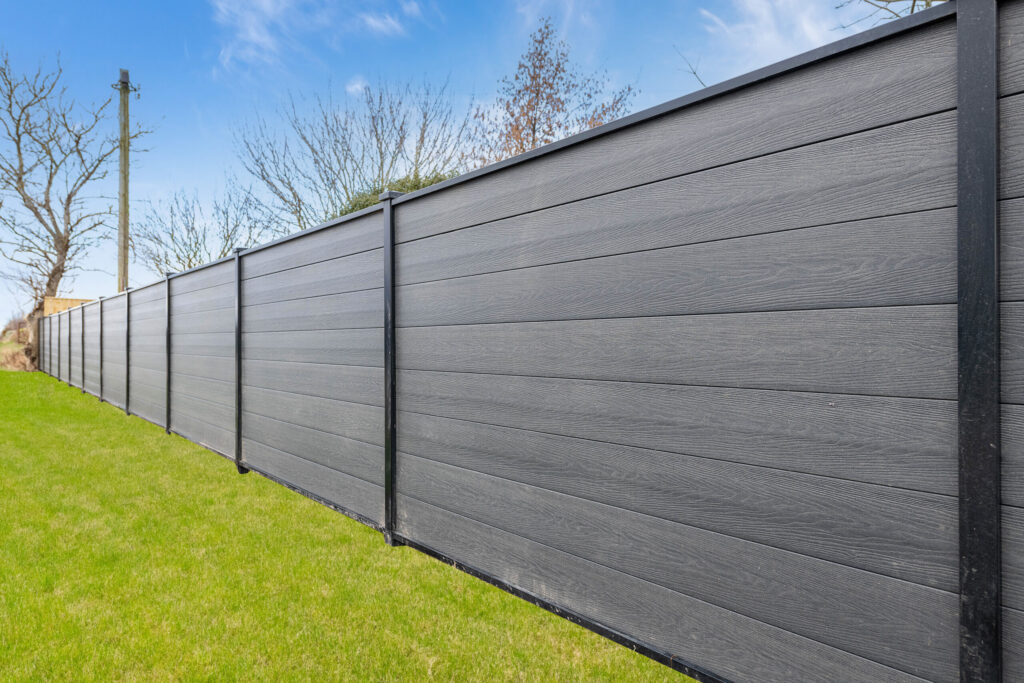
So, to help you assess the damage properly – and spend your money effectively! – our fencing experts have shared their top tips for identifying whether to replace your fence in sections or all at once.
Debating a partial replacement
On paper, replacing just one or two damaged panels often looks like the best decision, financially.
After all, a full fence replacement represents a larger upfront cost, while sectional repairs is not only a shorter initial cost, but it also spreads out the cost over time.
And in some instances, partial replacements are a great way to minimise expense, while successfully resolving the issue. We’ll cover these in more detail below.
However, there are practical and financial factors, which most people don’t consider until it’s too late.
If you’re debating a partial replacement, you should first evaluate:
- How structurally sound is the rest of your fence?
Is the rest of the fence in a good enough condition to justify keeping it?
- How old is your fence?
Homeowners often underestimate how uneven fences age. Although one section may have failed before the others, often neighbouring panels are not far behind. This is particularly common in fences that have failed due to age, or timber fences that have failed due to damp, wind and moisture exposure.
- Is the rest of your fence sagging?
If one section has to be replaced due to sagging, you’ll need to check if the same issue is affecting the rest of the panels (even if only partially). If you’re not careful, you could be left with mismatched panel heights, as older sections continue to sag. This can even accentuate the appearance of the sagging in the remaining fencing, actually making the rest look worse than it is.
- Has the rest of your fence started to dull?
In some cases, replacing fences in sections can lead to a pretty obvious colour mismatch. If you don’t check the colour of your existing fencing against the replacement, this could lead to visible colour differences between the new pressure-treated timber and weathered panels, which never quite fully blends, even after a few years.
Weighing up the costs
Partially replacing your fence can help you to spread out the costs over a longer period of time, and prevent you from having to spend a larger sum upfront.
But, over time, a piecemeal replacement can result in a larger overall cost, which negates the short-term savings.
The costs of partial replacement can build over time, if:
- Multiple installation call-outs are required over several years
- There is difficulty sourcing matching panels (e.g. when styles are discontinued or suppliers change)
- If adding newer timber fence posts alongside older timber posts accelerates the degradation of the newer posts (e.g. due to rot spreading)
- If you are stuck in a cycle of perpetual fence repairs
In these situations, partial replacement can create ongoing problems and actually increase the overall costs in the long term.
When is sectional replacement the best choice?
Partial replacement can provide a great effective solution in several specific scenarios.
This includes:
- If storm damage has affected only one area (and the fence is otherwise sound)
- If the damage is due to localised rot, caused by a specific issue (e.g. a leaking gutter
- If a single post has failed unexpectedly
- If your fence is relatively new, or a long way off the end of its lifespan
- If your partial replacement is part of a deliberate budget management plan, allowing you to spread the costs, with a plan to complete the remaining sections over the next 12-24 months.
In these situations, sectional replacement allows you to extend the life of the overall fence, without creating constant, ongoing maintenance problems.
When is full fence replacement the best choice?
However, if your fence is already showing signs of age or degradation, full replacement is usually the smarter investment.
Typical signs that indicate a full replacement is needed include:
- Multiple leaning posts
- Noticeable sagging across numerous points
- Loose gravel boards
- Repeated storm damage
- Widespread rot or warping
- Brittle or softened panels
By replacing your fence all in one go, you can ensure a completely uniform appearance and reduce the overall replacement costs, with economies of scale applying to both the labour and materials.
Plus, replacing the fence as a whole gives you the opportunity to upgrade the entire post system to a more modern and durable option. For instance, you can swap your timber bases with concrete or DuraPost systems, to prevent recurring issues.
If you’re unsure whether it would be best to replace your fence in sections, or absorb the full fence replacement cost, Barnard Fencing is on hand to help.
Speak to our specialist team, and they’ll provide you with expert guidance about the best solution for your specific context. Don’t hesitate to get in touch.